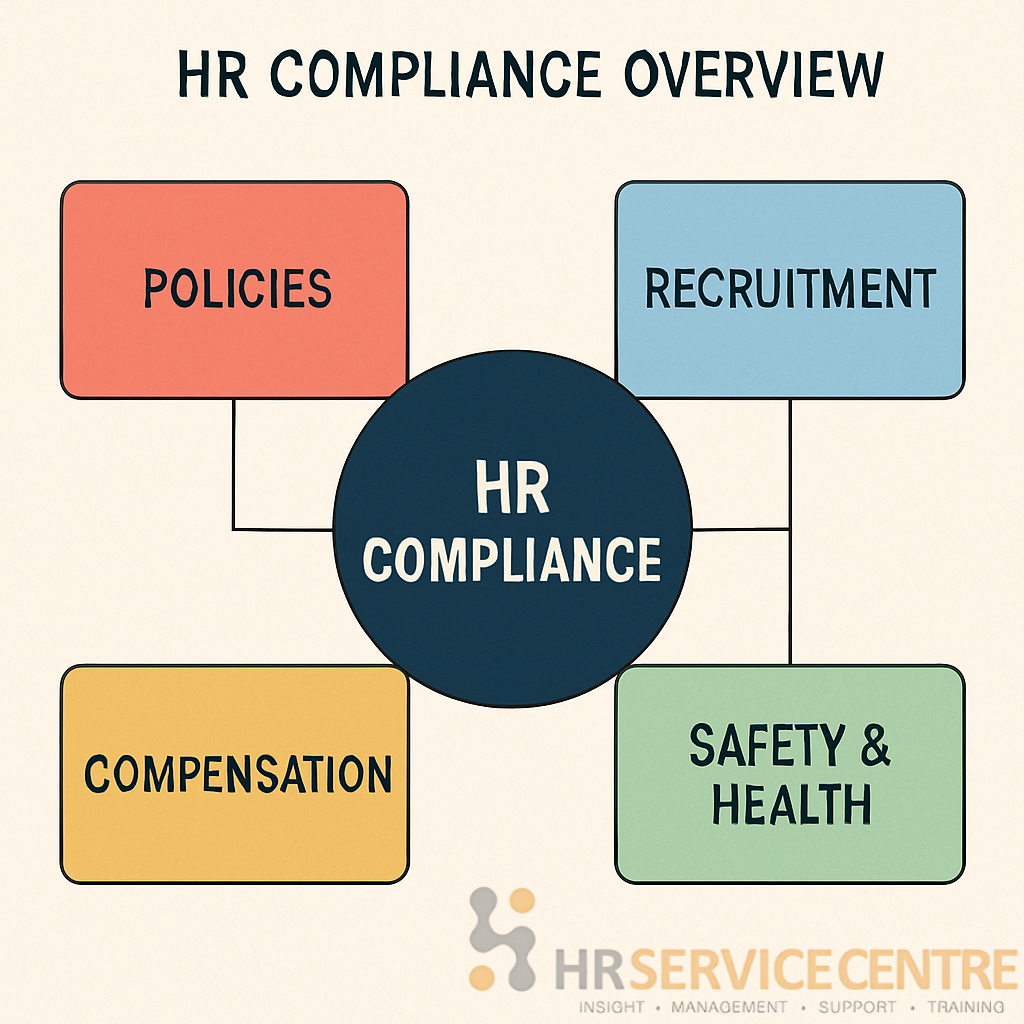
HR compliance is crucial for businesses of all sizes. It involves adhering to labour laws and regulations. This ensures a fair and safe workplace for employees.
Ignoring HR compliance can lead to costly legal issues. Businesses may face fines or lawsuits. This can damage a company’s reputation and financial health.
Small businesses often struggle with HR compliance. Limited resources make it challenging to keep up with regulations. However, effective strategies can simplify this process.
HR compliance services offer valuable support. They provide tailored solutions to meet specific business needs. This helps companies maintain compliance and avoid legal pitfalls.
Understanding HR compliance is essential for business success. It requires continuous monitoring and updating of policies. This article will guide you through essential practices.
What is HR Compliance?
HR compliance refers to the process of ensuring that a business adheres to relevant labour laws and regulations. These laws cover various aspects, from wage and hour laws to health and safety standards. Non-compliance can result in severe legal consequences.
HR compliance services help you to develop and implement policies that align with these legal requirements. It requires businesses to stay updated with any legislative changes. This can be challenging, as laws can vary by location and industry.
Key components of HR compliance include:
- Adherence to employment laws and standards
- Maintenance of accurate employee records
- Implementation of fair hiring and employment practices
In addition, HR compliance plays a critical role in building a respectful workplace culture. It fosters trust between employees and management, contributing to employee satisfaction and retention. Businesses that prioritise HR compliance demonstrate their commitment to ethical practices and legal standards.
Why HR Compliance Matters for Businesses
HR compliance is crucial for protecting businesses from legal pitfalls. Failure to comply can lead to penalties, fines, and lawsuits. Such legal issues can harm a company’s reputation significantly.
Ensuring HR compliance promotes a fair and safe workplace. It helps in creating a structured and transparent environment for all employees. This fosters trust and boosts morale within the workforce.
Another reason HR compliance is essential is financial security. By adhering to laws, businesses can minimise the risk of costly legal actions. Compliance can also prevent employee turnover by maintaining fairness in policies.
Key advantages of HR compliance include:
- Minimizing legal risks and liabilities
- Enhancing employee engagement and satisfaction
- Strengthening the company’s public image
In addition to these benefits, HR compliance allows businesses to stay competitive. Ensuring compliance helps companies adapt swiftly to regulatory changes. This proactive approach can support business growth and sustainability.
Key Areas of HR Legal Compliance
HR legal compliance encompasses several critical areas that businesses must address. Ensuring compliance starts with understanding these key aspects. Each area requires careful attention and ongoing monitoring.
Statutory and regulatory compliance is the backbone of HR compliance. It involves adhering to laws and regulations set by governmental bodies. These can include labour laws, safety standards, and equal employment opportunities.
Contractual compliance focuses on the agreements made with employees. Employers must ensure that all contracts are fair and legally binding. This includes terms related to wages, working hours, and job responsibilities.
Key compliance areas include:
- Statutory and regulatory requirements
- Employee contractual obligations
- Anti-discrimination and harassment policies
- Health and safety standards

Protecting employee data and privacy is also a vital area. Businesses must secure personal information and comply with data protection laws. This commitment builds trust and protects the organisation from potential breaches.
Finally, HR compliance ensures diversity and inclusion within the workplace. Companies must implement policies promoting a diverse and respectful culture. These efforts support broader organisational goals and foster innovation.
Statutory and Regulatory Compliance
Statutory and regulatory compliance involves aligning with labour laws and government regulations. These laws cover employee rights, workplace safety, and fair hiring practices. Businesses must stay informed to avoid potential violations and penalties.
Maintaining statutory compliance requires regular updates to policies. organisations must monitor changes in laws and implement them promptly. Failure to comply can lead to costly fines or reputational damage.
Key regulatory compliance areas include:
- Employment and labour laws
- Health and safety regulations
- Equal employment opportunity laws
Understanding these areas is crucial for effective HR management. Regular training and updates can aid in remaining compliant and proactive.
Contractual Compliance
Contractual compliance refers to honouring agreements between employers and employees. Ensuring the legality and fairness of contracts is vital. These agreements define roles, responsibilities, and compensation.
Businesses should regularly review and update employment contracts. This ensures alignment with current laws and business practices. Clear contracts help in avoiding disputes and misunderstandings.
In addition, contractual compliance requires mutual understanding. Both parties should have a clear grasp of their rights and obligations. This clarity fosters a harmonious and productive work environment.
Common HR Compliance Challenges
Navigating HR compliance advice can be tough for many businesses. Various challenges often arise, particularly as regulations evolve and become more complex. Identifying these challenges early is key to maintaining compliance.
Resource limitations often hinder compliance efforts. Smaller organisations, in particular, may struggle with the necessary tools and expertise. This can lead to overlooked compliance issues or slow response times.
Key compliance challenges include:
- Limited resources and expertise
- Keeping up with evolving regulations
- Managing compliance across multiple jurisdictions

Additionally, frequent changes in regulations can pose challenges. Businesses must consistently monitor for updates to laws and guidelines. Failure to adapt swiftly can result in compliance gaps and legal issues. Providing ongoing training and support can help overcome these obstacles.
HR Compliance for Small Businesses
Small businesses face unique hurdles in HR compliance for small business. Limited budgets and smaller teams make it challenging to manage all aspects effectively. However, compliance is crucial to avoid risks and penalties.
Tailored solutions can help small businesses overcome these challenges. Leveraging technology and external expertise can provide much-needed support without straining resources.
Essential strategies include:
- Implementing cost-effective compliance tools
- Outsourcing compliance tasks
- Providing targeted staff training

By focusing on these areas, small businesses can maintain compliance more efficiently. Remember, small steps can lead to significant compliance improvements.
Conducting an HR Compliance Audit
An HR compliance audit is vital for identifying and addressing gaps in practices. It helps evaluate the effectiveness of current HR policies and procedures.
Conducting regular audits ensures that your business stays ahead of legal obligations. This proactive measure reduces the risk of non-compliance issues.
Key steps in an HR compliance audit include:
- Reviewing all employment policies
- Assessing employee records for accuracy
- Evaluating employee training programmes

Regular audits offer peace of mind by confirming adherence to regulations. They also highlight areas where improvements can be made, leading to better HR practices overall. Businesses that invest in audits can significantly reduce the risk of costly errors.
Best Practices for Managing HR Compliance
Managing HR compliance requires a strategic and ongoing approach. organisations should regularly review and update their HR policies to align with current laws and practices. This ensures that all practices meet the latest standards and reduces compliance risks.
Effective communication with employees about HR policies is also essential. Regular training sessions and updates help employees understand their roles in maintaining compliance.
Consider these best practices for managing HR compliance service expectations:
- Establish a dedicated compliance officer
- Regularly update employee handbooks
- Implement effective training programmes

Additionally, leveraging technology for tracking compliance activities can enhance efficiency. Automated systems help monitor adherence to HR policies, allowing for timely updates and interventions. By adopting these practices, businesses can foster a culture of compliance, ensuring a healthy and lawful work environment. This approach not only protects the organisation but also enhances employee trust and satisfaction.
Leveraging HR Compliance Services and Solutions
HR compliance services and solutions are vital in easing the burden of managing compliance internally. These services offer tailored solutions, allowing businesses to focus on core operations while ensuring all HR practices meet legal standards. Outsourcing compliance tasks can be cost-effective, especially for small businesses with limited resources.
Consider these HR compliance solutions:
- Compliance software tools
- On-site audits and training
- customised consulting services
utilising such services can help businesses streamline HR processes and manage compliance risks proactively. This strategic approach not only reduces the likelihood of legal issues but also enhances overall operational efficiency. Partnering with expert providers ensures access to the latest compliance tools, fostering an environment of continual improvement.
The Role of HR Compliance Consulting and Support
HR compliance consulting plays a crucial role in helping businesses navigate complex regulatory landscapes. Consultants provide expert advice, tailoring strategies to suit specific industry needs and HR regulatory compliance.
Key functions of HR compliance consulting include:
- Providing bespoke compliance strategies
- Offering insights into regulatory changes
- Assisting with policy implementation
Ongoing HR compliance support is essential for maintaining up-to-date practices in a changing legal environment. This support includes access to compliance tools, regular updates on policy changes, and continual guidance on best practices, ensuring that businesses remain ahead of compliance challenges.
Best HR Compliance Services UK: Unique Considerations
HR compliance in the UK involves adhering to both national and European Union regulations. The evolving landscape requires businesses to stay updated on changes, particularly with the impact of Brexit.
Key areas for UK HR compliance companies include:
- Employment contracts
- Data protection (GDPR)
- Health and safety regulations

Navigating these regulations demands a thorough understanding of legal obligations to ensure compliance. For UK businesses, this means ensuring alignment with domestic policies while also remaining aware of international standards. Partnering with the best HR compliance experts can help manage these complexities effectively.
Building a Culture of Compliance
Creating a culture of compliance involves embedding ethical practices into daily operations. This requires active participation from all levels of the organisation.
Key strategies include:
- Regular compliance training
- Open communication channels
- Leadership support

Encouraging a proactive mindset among employees ensures adherence to compliance standards. By fostering transparency and accountability, businesses can maintain robust HR compliance practices. This culture not only mitigates risks but also enhances employee morale and trust.
Conclusion: Staying Ahead with Effective HR Compliance
In today’s dynamic business environment, staying compliant is crucial. Proactive compliance management helps avoid costly legal issues.
Regular updates to policies and processes ensure alignment with evolving regulations. utilising expert guidance and appropriate tools can simplify these efforts.
By prioritizing HR compliance, businesses can foster a safe and productive work environment, driving long-term success and growth.